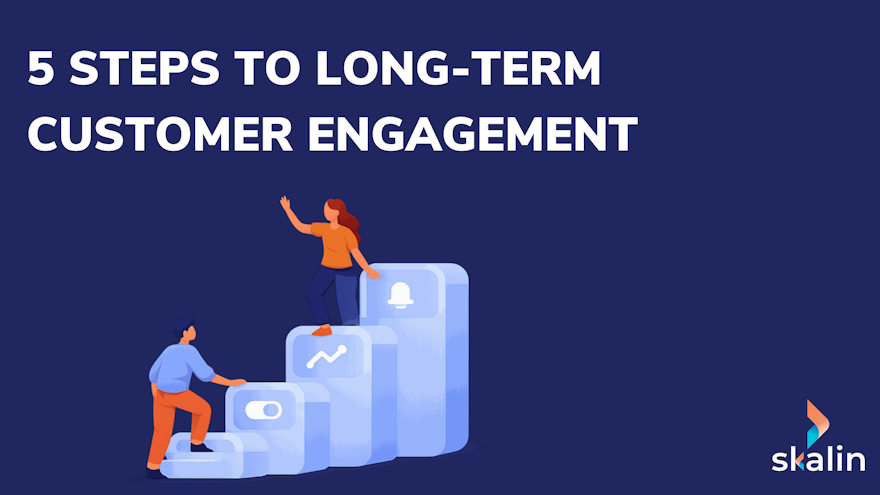
Every CSM has been there: a customer stops using the tool, decides to downgrade or cancels their contract. Churn is never pleasant, but it certainly shouldn't happen without you seeing it coming, and without you having done everything you could to prevent it!
Targeted actions need to be in place from the customer's onboarding and throughout the relationship. Here are 5 steps to secure your customers, keep them engaged for the long term and reduce your company's overall churn!
Step 1: Make sure onboarding is solid and thorough
A good onboarding programme is essential to engage your users from day one. These first steps will be their first impression of your tool. This is the moment they'll decide whether your platform feels intuitive or, on the contrary, too complex.
So you need to prepare a complete programme that gradually increases in difficulty, gives them the keys to using the product and shows them its value. This programme can be human-led (workshops, training sessions...), fully digital (online academy, product tours...) or a hybrid of the two. It can also be tailored in several ways: by persona, by stage of getting started, by difficulty level or by family of use cases. Many tasks are very easy to automate, such as email sequences that push user guides, features, customer stories and usage tips.
The whole point of onboarding, then, is to train users and to demonstrate the value you bring from the earliest stages of implementation.
Be careful: you need a clear definition of what "successful onboarding" means, so you can regularly track how effective and relevant your programme is, and adjust it accordingly. For example: "I want all my key contacts, champions and administrators to have used this feature before their third login"; "I want these X people to have reached step 5 of the online programme before the end of their first month".
Step 2: Support customers through the change
Implementing a new tool inevitably means changing your customer's usual ways of working. Many stakeholders have to adapt and build these new practices into their daily routine. Some of them, however, may be reluctant about your tool at first.
So it's crucial to support contacts at every level, to reassure them, address their doubts and fears, and bring them on board in a healthy way. This support gradually engages future users, wins over as many people as possible, secures solid adoption of your product and helps you retain your customer accounts. The underlying goal, of course, is to show your customer the value of your product against the objectives you defined together at the outset.
In practice, how do you go about it?
- Make sure your decision-makers and/or administrators communicate with end users well in advance. Timing is key: users mustn't feel rushed, because urgency breeds stress, fear and therefore resistance. Help your customers understand that they need to leave a little time for people to voice their fears, so the support programme can then be adjusted.
- Coach your decision-makers and/or administrators so they can explain what's at stake within their organisation. Don't overlook this explanatory step: it's where a decision-maker shows their teams the problems they originally faced and why they bought the platform. This is when the "proof of value" of your tool starts to be felt.
- Train users on your platform gradually, according to features, difficulty levels and use cases. Support them with training materials, a suitable help centre and a learning path designed for them.
By taking the time to follow these steps before rolling out a platform, you help end users understand the approach, accept it and voice their fears. You can then offer them a support and training programme that reassures them. Once reassured, users are much easier to bring on board and keep.
Step 3: Keep a close eye on your platform's usage statistics
Start by asking yourself: what does perfect use of my platform look like?
Once you've identified the ideal usage you're aiming for, set up tracking metrics such as:
- Completion of a specific action / use of a specific feature
- Number of monthly (MAU) or weekly (WAU) unique users
- Product stickiness (WAU/MAU)
- How often users log in
- Time spent on the platform
- Number of credits used
These adoption metrics give you a much clearer view of how your users actually use the product.
Next, set thresholds and numerical targets for these health indicators, along with alerts. Tracking usage data then lets you set up automated actions. For example, if a user tagged as a "champion" hasn't logged in for X days, the Customer Success Manager can receive an alert to get in touch. Or an email sequence can be triggered, using pre-built templates designed specifically to re-engage a champion.
With this usage data, your customers' health indicators become more accurate, especially when combined with NPS, CSM sentiment and onboarding score.
In short, define usage goals, implement tracking metrics, set thresholds and automate re-engagement playbooks or sequences according to customer accounts and personas. You'll improve adoption of your tool, secure usage and, over time, limit churn!
Step 4: Bring users together in a community
A customer who is well trained and convinced of the tool's value is far less likely to churn. To prove your product's value, setting up and running a user community is extremely valuable. The aim here is to give customers a dedicated space for sharing, whether through events, webinars, user clubs, customer stories or an online forum, for example.
This community needs to be alive, run by people from your teams, so you can:
- Understand your customers' daily pain points even more precisely, along with their challenges and needs, and dig deep into their use cases. Ultimately, it lets your customers help each other, which strengthens usage and adoption. Let your customers and key users speak up and share the value they get from your product every day: their words will carry far more weight with other customers than yours.
- Gather product feedback: what's intuitive and easy to use, and what's less so. All of this helps you update your many resources and optimise your training and support programme.
- Let customers talk to each other: this can open them up to new use cases and possibilities in the tool they hadn't yet considered. Let your customers convince each other and open new doors towards potential upgrades and upsells.
Don't forget: your satisfied customers are your best advertisement for engaging others!
Step 5: Stay in regular contact with people at every level
The Customer Success Manager needs to manage customer accounts proactively, to ensure the best possible satisfaction and to keep delivering value throughout the customer lifecycle. So be proactive and listen to your customers through regular contact, to spot potential problems, blockers and opportunities, and limit churn over the long term.
To do that, it's important to keep several types of contact engaged, and to adapt your message to each one's needs:
- The "decision-maker" or "economic buyer", often a director, is the person with the authority to decide on a purchase, renewal or cancellation. Even if they aren't meant to be an end user, keep in regular touch with them and speak their language. Talk about efficiency, time saved, financial gains and return on investment. In practical terms, organise regular calls or steering committees to report on what has been done. Use statistics to prove that keeping your product is in their interest, given the gains it brings them against the objectives set at the outset.
- Key users, the platform experts who will be your internal champions. Make sure they're satisfied and that they keep finding operational value in your product on a regular basis. Feed them new use cases, tell them about new features, give them usage tips and connect them with their peers. Make sure you don't lose their interest or their buy-in, because they'll be the ones driving use of the tool across the organisation (and, as a bonus, taking first-line support off your hands).
- Depending on your tool, you may also need to keep in regular contact with end users, or at least make sure they're trained and using the platform properly. This could take the form of an internal user club within a customer's organisation, or satisfaction surveys. Automate as much as possible of the content and resources you'll provide throughout their use of the product.
Staying in regular contact with people at different levels is all the more crucial because your contacts may change roles within your customer's organisation. Keep track of job changes, departures and promotions that could affect your relationship with the account.
In conclusion: prepare for renewals well in advance by following all the steps above. Several months before renewal, make sure your users are trained and committed to your solution. Track your usage statistics and hold regular meetings with contacts at different levels. And adapt your action plan quickly if buy-in isn't there!
Further reading: