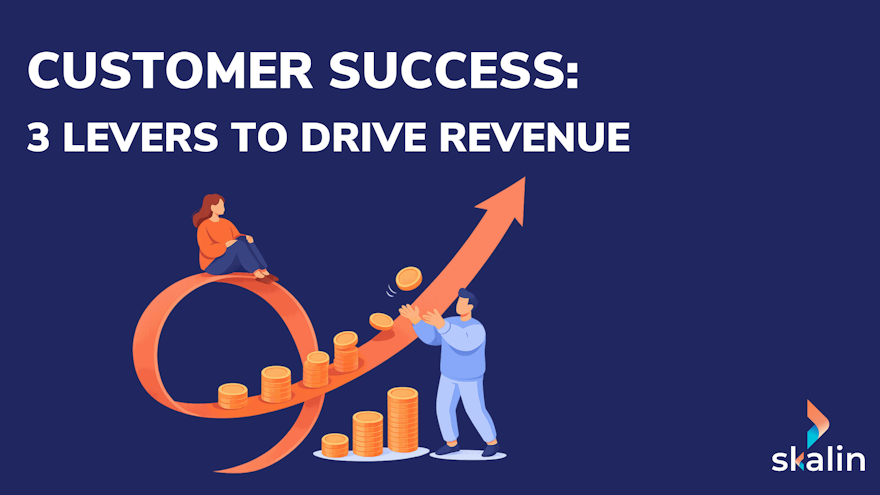
Customer Success is no longer just there to support customers: it has become a direct growth lever. Yet many CSMs still hesitate to talk about revenue, for fear of damaging the customer relationship. What if it were the other way round? What if they already had everything they need to drive expansion, without ever becoming pushy salespeople?
CS teams are now expected to contribute to expansion and retention, sometimes even to a revenue quota. But on the ground, it's more complicated!
Many CSMs feel entitled to talk about usage, adoption and projects. But far less comfortable when it comes to upsell or budget. The fear of coming across as a dodgy salesperson, damaging the relationship or losing control of the financial discussion is real.
Yet Customer Success already has unique superpowers for driving revenue with its customers, without betraying its DNA. The three main ones: customer knowledge, a relationship of trust and the ability to talk about real value.
Superpower #1: customer knowledge
Ask any experienced salesperson what the secret of a good sale is. The answer will almost always be the same: discovery. Asking the right questions, understanding the context, identifying what's really at stake. This phase accounts for 80 to 90% of a sale's success.
And who's better placed than a CSM to know a customer? In regular contact with their teams, present at check-ins and watching day-to-day usage, the CSM builds up a wealth of information that no other team naturally has.
How to activate this superpower: with curiosity
The trap is thinking you already know. Too often, to look like an expert, we stop asking questions. We nod along in meetings. We interpret instead of asking.
The best opportunities come from the questions we haven't asked yet:
"What's changed in your priorities since the start of the year?"
"How exactly do you put your reports together today?"
"What would take you the most time if you had to start again from scratch?"
These questions open doors nobody else could have opened. You have to be willing to look naive. It's counter-intuitive, but it's exactly what makes the difference (and demonstrates your expertise along the way).
Watch out: prepare your questions
Curiosity doesn't mean improvising. The customer isn't there to play twenty questions.
Arrive at the meeting prepared:
- Cross-check the information available internally (support feedback, usage metrics, onboarding notes)
- Prepare targeted questions: if you already have a project in mind to suggest, focus on open questions around that topic. If not, start from the data you have and ask for more information about whatever caught your attention.
Superpower #2: a relationship of trust
This is probably a CSM's most powerful asset, and the one that causes the most anxiety when it comes to selling. "If I talk about budget, won't I damage the relationship?"
That worry rests on a false assumption: that selling and supporting are incompatible. In reality, a customer who trusts their CSM is more receptive to a proposal, not less. They know the recommendation comes from someone who understands their context and has shown they can help. And suggesting the right next step at the right time only strengthens the relationship.
How to activate this superpower: with honesty
When a CSM spots an opportunity, the best approach is to explain what they're seeing:
"Looking at your usage over the last three months, one thing stands out. You use [feature A] a lot, but [feature B] isn't in your subscription, even though customers with a similar profile to yours are getting real results from it. Would you like to talk about it?"
No tricks. Just a factual observation, a shared finding and an open door. The customer decides. And it's precisely because they don't feel pushed that they're more inclined to move forward.
Golden rule: only recommend a project if you see a real benefit for the customer. If that benefit isn't clear in your mind, it won't be clear in theirs either, and it may be misinterpreted.
Watch out: stay focused on the positive
A relationship of trust and honesty doesn't mean explaining every flaw of every project in detail. When you're hands-on, you see the problems, the limitations, the cases where things don't work perfectly. That's normal. But this isn't the time to put them on the table.
A doctor prescribing a treatment doesn't start by listing every side effect. They start with the expected benefit. It's the same logic for a CSM: the "why" comes first. The nuances will come at the right time.
Superpower #3: a focus on real value
Sales teams sell a promise. CSMs see the reality. They know what the customer really uses, what works, what makes a difference day to day and what's gathering dust in a drawer.
This knowledge of the value actually perceived is a considerable advantage. When a CSM suggests an additional project, they're not selling a slide deck. They're selling something they've seen work for other customers, in similar contexts, with concrete results.
How to activate this superpower: by being practical
The key is to speak the customer's language, not marketing jargon.
"Your teams currently spend 3 hours a week compiling reports by hand. My other customers halved that time by switching on this module, because they no longer had to go through Excel."
Always put yourself in the other person's shoes. What's at stake for them personally? What do they need to prove to their management? What are they assessed on? A proposal aligned with their personal goals is far more likely to succeed.
And nothing is more convincing than a peer's results. Share what your other customers do day to day, and why.
Watch out: talk value, not features
The risk is slipping into "product consultant" mode. You know the tool so well that you end up explaining the "how" instead of the "why". Even when you do a demo in a sales context, you're not trying to train the user. You can show them concretely how it works while keeping your message focused on results.
Until the customer has bought into the idea, stay on value. Once they're convinced, you can get into the functional details. Reversing that order is the surest way to lose their attention.
Bonus: the Sales superpower
Customer knowledge, trust, real value: these are the CSM's superpowers. But there's a fourth, just as decisive in a sales process, that Sales and Account Managers master naturally: distance.
Distance is the ability to step back from the relationship. Saying no when a request is unreasonable. Chasing when a deal is dragging. Going in to bat with the final decision-maker. Holding firm on commercial terms. These are moves a CSM can't afford to make without risking the relationship they've built.
And that's exactly what makes the two roles complementary. The CSM spots the opportunity, qualifies it and feeds it with concrete evidence. The salesperson or AM takes over for the negotiation and closing. One brings on-the-ground credibility, the other brings commercial structure.
The best expansions don't come from CS alone, or from Sales alone. They come from the two working together.
What next?
The real barrier to CS contributing to revenue isn't a skills problem or a tools problem. It's a mindset problem. As long as a CSM sees selling as "someone else's job", their superpowers stay dormant.
Yet they're formidable weapons. By building revenue into their daily work and accepting this paradigm shift, CSMs create conversations that are naturally business-oriented, opportunities emerge without forcing them, and collaboration with sales teams takes on a whole new dimension.
There's just one thing missing: daring to do it.
Further reading: